
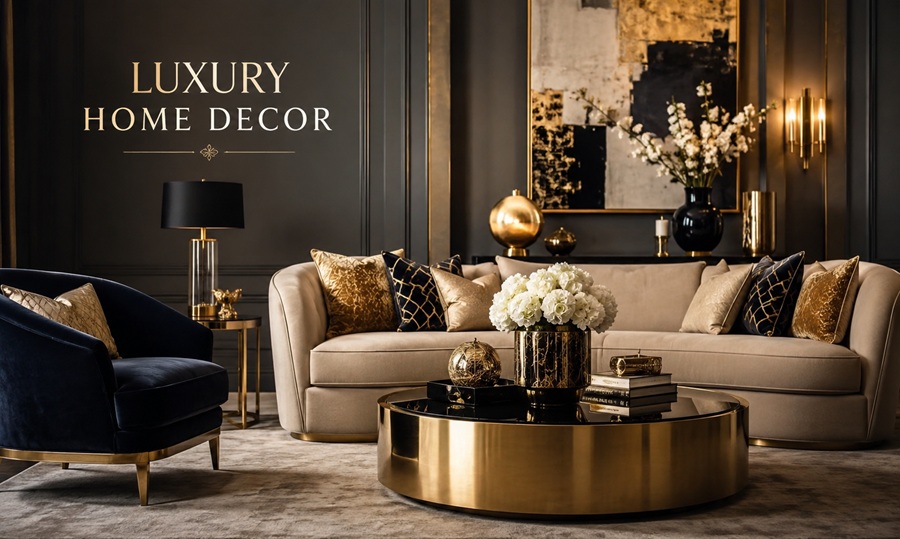

Luxury home decor isn’t about how much something costs. It’s about material quality, restraint, and how well a space is put together. A room can be expensive and still look cluttered, and a room built on a modest budget can still read as high-end if the basics are handled right. Here’s what actually separates luxury decor from decor that’s simply expensive.
The Core Traits of Luxury Interiors
Quality materials over quantity of objects
Luxury spaces tend to use fewer, better pieces rather than filling every surface. Solid wood, natural stone, linen, and leather age well and hold their appearance longer than particleboard furniture or synthetic fabrics.
A tight, intentional color palette
Most luxury interiors work within two or three main colors, often neutrals like ivory, taupe, charcoal, or deep green, with one accent color used sparingly. A room with too many competing colors rarely reads as high-end, regardless of the price tag on individual items.
Layered lighting
Instead of one overhead fixture, luxury spaces typically combine ambient lighting, task lighting, and accent lighting. This layering creates depth and warmth that a single ceiling light can’t replicate.
Attention to texture
Velvet, boucle, linen, brushed metal, and natural wood grain add visual and tactile interest without relying on pattern or color to do the work.
Proportion and scale
Furniture that’s sized correctly for the room, rather than too large or too small, is one of the more overlooked traits of a well-designed space. Luxury interiors tend to get this right consistently, since poor scale is one of the fastest ways to make even expensive furniture look off.
Key Elements That Define the Look
- Statement furniture pieces: one or two well-made items, like a sculptural chair or a substantial dining table, rather than an entire room of matching furniture from one set
- Natural materials: marble, travertine, solid brass, and real wood instead of laminate or plastic imitations
- Custom or tailored elements: made-to-measure drapery, upholstered headboards, or built-in shelving instead of off-the-shelf pieces sized to fit
- Art and objects with a point of view: original art, sculptural objects, or vintage finds rather than mass-produced prints
- Negative space: luxury rooms usually have breathing room. Every surface doesn’t need to be filled
- Considered hardware: door handles, cabinet pulls, and faucets in a consistent finish throughout the home, rather than mismatched builder-grade fixtures
Luxury Decor Room by Room
Living room: prioritize one substantial seating piece, layered lighting from at least two sources, and a coffee table in a natural material like stone or solid wood rather than glass and metal alone.
Bedroom: quality bedding in natural fibers, a tailored headboard, and lighting on dimmers rather than a single bright overhead fixture make more difference here than decorative objects.
Kitchen: natural stone countertops, solid cabinetry, and consistent hardware finishes carry more weight than decorative accessories on the counter.
Bathroom: natural stone or large-format tile, brushed metal fixtures, and layered lighting around the vanity mirror tend to define a higher-end bathroom more than any single accessory.
What Actually Drives the Cost
The price difference between a standard room and a luxury one usually comes down to a few specific factors rather than everything being marked up evenly.
- Material sourcing: solid wood, natural stone, and genuine leather cost significantly more than engineered alternatives
- Craftsmanship: hand-finished details, custom upholstery, and made-to-order furniture take longer to produce and cost more than mass manufacturing
- Scale of custom work: built-ins, custom drapery, and tailored furniture are priced individually and vary a great deal based on the space and materials chosen
- Professional design services: working with an interior designer adds cost but also helps avoid expensive mistakes, since sourcing and space planning are handled by someone with direct trade access
- Installation and labor: custom millwork, tiling, and upholstery all involve skilled labor that adds to the total cost beyond the materials themselves
Because these factors vary so widely by region, materials, and scope, there’s no single number that applies to every luxury project. A better approach is to identify which of these factors matter most to you and allocate your budget accordingly, rather than assuming luxury requires an unlimited budget across the board.
Where to Splurge and Where to Save
Not every element of a room needs the same level of investment. A few areas that tend to reward spending more:
- Upholstered seating you use daily, since fabric quality affects both comfort and how well it holds up over time
- Lighting fixtures, especially in rooms where you spend a lot of time
- Bedding and linens, which have direct daily contact and a noticeable quality difference
Areas where it’s easier to save without sacrificing the overall look include decorative accessories, seasonal accent pieces, and items that are easy to swap out later, like throw pillows or small vases. Spending less on things you’ll likely change your mind about in a year or two, and more on the pieces you’ll keep for a decade, tends to produce a better long-term result than spreading a budget evenly across everything.
Getting the Look Without an Unlimited Budget
- Choose a smaller number of well-made pieces instead of furnishing a whole room at once
- Prioritize investment items that get daily use, like a sofa or bed frame, and save on pieces that are easier to replace later
- Use paint, lighting, and hardware upgrades, which are relatively affordable, to elevate a space before buying new furniture
- Shop vintage or secondhand for solid-wood and stone pieces, which are often better made and less expensive than new equivalents
- Keep the color palette restrained even if the budget is limited. A cohesive, simple room reads as more expensive than a busy one
- Focus on one room at a time rather than spreading a limited budget across the entire home at once
Common Mistakes That Undercut a Luxury Look
Overcrowding a room with too many decorative objects is one of the most common issues, since it removes the visual breathing room that makes luxury spaces feel calm rather than cluttered. Mixing too many finishes, like gold, chrome, and black metal all in the same sightline, can also make a space feel disjointed. Relying entirely on a single overhead light instead of layering different light sources is another frequent gap between a room that looks expensive in photos and one that actually feels considered in person. Buying furniture purely because it’s expensive, without checking whether the proportions actually suit the room, is another mistake that can undercut an otherwise well-planned space.
Frequently Asked Questions
Does luxury home decor have to be expensive?
Not entirely. While certain materials and custom work do cost more, a restrained color palette, quality basics, and thoughtful lighting can make a modest room look considerably more elevated without a large budget.
What colors are most common in luxury interiors?
Neutral tones like ivory, taupe, warm white, charcoal, and deep green are common bases, often paired with one accent color used sparingly rather than several bold colors competing for attention.
Is it better to hire an interior designer for a luxury look?
A designer can help avoid costly mistakes and often has access to trade sourcing that isn’t available to the general public, which can be worth the added cost for larger projects. For smaller updates, it’s not strictly necessary.
What’s the difference between luxury and maximalist decor?
Luxury decor generally favors restraint, fewer high-quality pieces, and negative space. Maximalist decor embraces more pattern, color, and objects layered together. The two can overlap, but they aren’t the same approach.
How do I make a room look expensive on a tight budget?
Focus on a simple color palette, upgrade lighting and hardware, and prioritize a few quality pieces over filling the room with inexpensive items. Removing clutter often makes as much difference as adding anything new.
Which room benefits most from a luxury decor upgrade?
Living rooms and primary bedrooms tend to show the most noticeable difference, since they’re used daily and typically have the largest furniture pieces where material quality is most visible.