

Photographs capture some of the most meaningful moments in life, from family celebrations and holidays to everyday experiences shared with loved ones. Displaying these photographs at home allows you to revisit those memories while adding a personal touch to your interior. With the right frames, even a simple photograph can become an attractive decorative feature.
Photo frames are available in different materials, sizes, colours, and designs, making them suitable for a wide range of interior styles. Whether you want to decorate a living room, create a personal bedroom display, or arrange family photographs along a hallway, choosing the right frames can help bring the space together.
1. Choose Frames That Match Your Interior Style
The first step is to consider the existing decor in your home. Furniture, wall colours, flooring, and other accessories can influence which frame designs will look most appropriate.
For modern interiors, simple frames with clean lines are often a practical choice. Black, white, and neutral finishes can complement contemporary furniture without distracting attention from the photograph itself.
Wooden frames are suitable for homes that feature natural materials, warm colours, or a relaxed atmosphere. Light wood can complement Scandinavian interiors, while darker finishes may work well with traditional furniture and richer colour palettes.
Metallic frames, including gold and silver finishes, can introduce a more decorative appearance. These options may suit formal living rooms, dining areas, or spaces where metallic accessories are already present.
You do not need to use identical frames throughout your home. Combining different designs can create a more personal look, provided there is a visual connection between them, such as a shared colour, material, or overall style.
2. Select the Right Frame Size
Frame size has a significant influence on how photographs appear within a room. A small frame may be ideal for a bedside table, while a larger photograph can create a focal point above a sofa or console.
Before purchasing a frame, measure the photograph carefully. Standard print sizes are convenient, but the dimensions of the frame’s internal opening should always be checked to ensure a suitable fit.
Consider the available wall or tabletop space as well. A large frame may overwhelm a narrow shelf, whereas several smaller frames can create a balanced arrangement across a wider surface.
Matting is another useful detail to consider. A mat is the border placed between the photograph and the frame. It creates visual space around the image and can make a smaller photograph appear more prominent.
For portraits and photographs with important details near the edges, ensure the frame does not cover any part of the image that you want to preserve.
3. Consider Different Frame Materials
The material of a frame affects its appearance, durability, weight, and maintenance requirements. Understanding the available options can help you make a more suitable choice.
Wooden frames remain popular because they offer a natural appearance and suit many interior styles. They are available in different finishes, from pale natural wood to darker stained designs.
Metal frames generally provide a clean and structured appearance. Their slimmer profiles can be particularly suitable for contemporary interiors where the focus is intended to remain on the photograph.
Plastic frames are often lightweight and available in a wide variety of colours. They can be useful for casual displays, children’s rooms, or arrangements that may change frequently.
Glass and acrylic are commonly used as protective coverings. Glass offers a clear finish, while acrylic is lighter and less prone to shattering. The most suitable option depends on the frame’s size, location, and intended use.
In Singapore’s humid climate, it is worth keeping framed photographs in dry, well ventilated areas. Check the backing material occasionally, especially if frames are displayed against walls where moisture may accumulate.
4. Create a Personal Gallery Wall
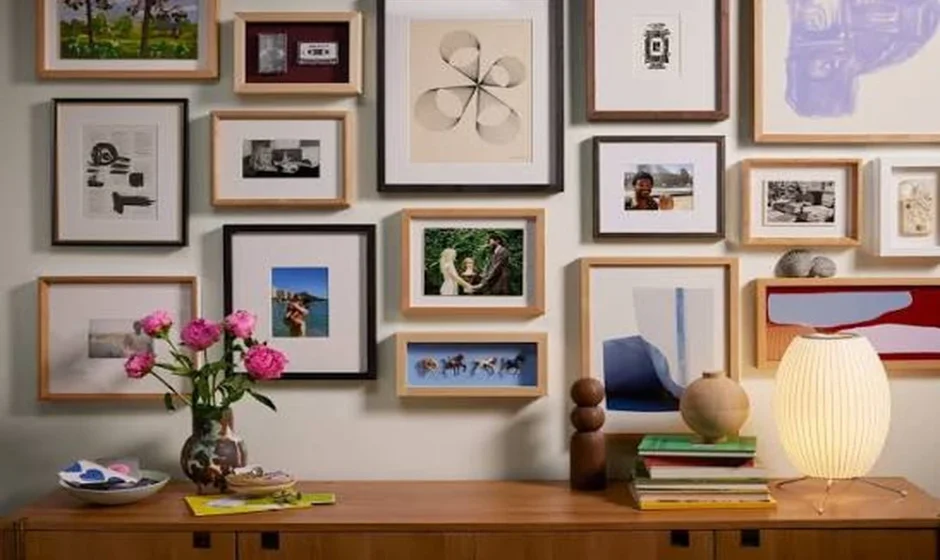
A gallery wall is an effective way to display several photographs together. It can turn an empty wall into a meaningful feature while allowing you to showcase family portraits, travel memories, and other favourite images.
Begin by deciding on a theme. You might arrange photographs chronologically, group them by family members, or select images that share a similar colour palette.
Matching frames create a neat and organised appearance, making them suitable for symmetrical layouts. Alternatively, combining different sizes and finishes can produce a more relaxed arrangement.
Before hanging the frames, plan the layout on the floor. This makes it easier to experiment with different positions and check the spacing between photographs.
For a balanced result, establish a central point and arrange the frames around it. Keep the gaps reasonably consistent, even if the frames themselves vary in size.
In smaller homes, a compact gallery wall can provide personality without taking up valuable floor space. Choose a manageable number of photographs and leave enough room around the arrangement to prevent the wall from appearing crowded.
5. Display Photo Frames in Different Areas
Photo frames can enhance several areas of the home, depending on the available space and the type of photographs you want to display.
In the living room, a collection of family photographs can create a welcoming atmosphere. Frames can be arranged on a console table, displayed on floating shelves, or mounted above a sofa.
Bedrooms are suitable for more personal images, including wedding photographs, family portraits, and travel memories. Smaller frames on bedside tables or dressers can introduce a subtle decorative detail.
Hallways and entryways can also benefit from framed photographs. A carefully arranged collection creates visual interest along otherwise plain walls and gives visitors a glimpse of the people and experiences that matter to you.
For home offices, photographs can make the workspace feel more personal without introducing unnecessary distractions. A single framed image on a desk or shelf may be sufficient.
When exploring photo frames singapore collections, consider where each frame will be displayed and how its dimensions, finish, and style will complement the surrounding furniture.
6. Protect Your Photographs From Sunlight and Moisture
Photographs can deteriorate over time when exposed to unsuitable environmental conditions. Choosing an appropriate location and frame can help preserve their appearance.
Direct sunlight may cause photographs to fade, particularly when they are displayed for long periods. Position frames away from strong sunlight whenever possible, and consider UV protective glazing for images that hold particular sentimental or financial value.
Moisture is another consideration in Singapore homes. Avoid placing valuable photographs close to sinks, showers, or other sources of water. Ensure that the frames and their backing materials remain dry.
Dust the frame regularly using a soft cloth. If the frame has glass, clean it carefully without allowing cleaning liquid to seep beneath the edges and reach the photograph.
For particularly important photographs, consider using suitable archival materials, including acid free mounting boards. These can help reduce the risk of discolouration caused by unsuitable materials touching the print.
7. Make Framed Photographs Part of Your Decor
Photo frames do not need to be limited to family portraits. They can also display artwork, illustrations, postcards, travel photographs, and other images that reflect your interests.
One approach is to coordinate framed photographs with other decorative elements. For example, a collection of travel images can complement a bookshelf containing souvenirs, while botanical photographs may work well alongside indoor plants.
You can also update your displays occasionally. Changing a few photographs allows the room to reflect new experiences without requiring a complete decorating project.
When arranging frames on shelves, vary their heights slightly while keeping the overall composition balanced. Avoid overcrowding the surface, and ensure each frame has adequate support to remain stable.
The most successful displays combine visual appeal with personal meaning. Choosing photographs that you genuinely enjoy seeing every day can make your interior feel more individual and welcoming.
Conclusion
Choosing suitable photo frames involves considering material, size, colour, placement, and the type of photographs you want to preserve. By paying attention to these details, you can create displays that complement your furniture while giving meaningful memories a place in your everyday surroundings.
When exploring photo frames singapore options, look for designs that suit your interior style, fit your available space, and provide appropriate protection for your photographs. Whether you prefer a simple tabletop frame or a carefully arranged gallery wall, thoughtful choices can help make your home feel more personal, organised, and inviting.