
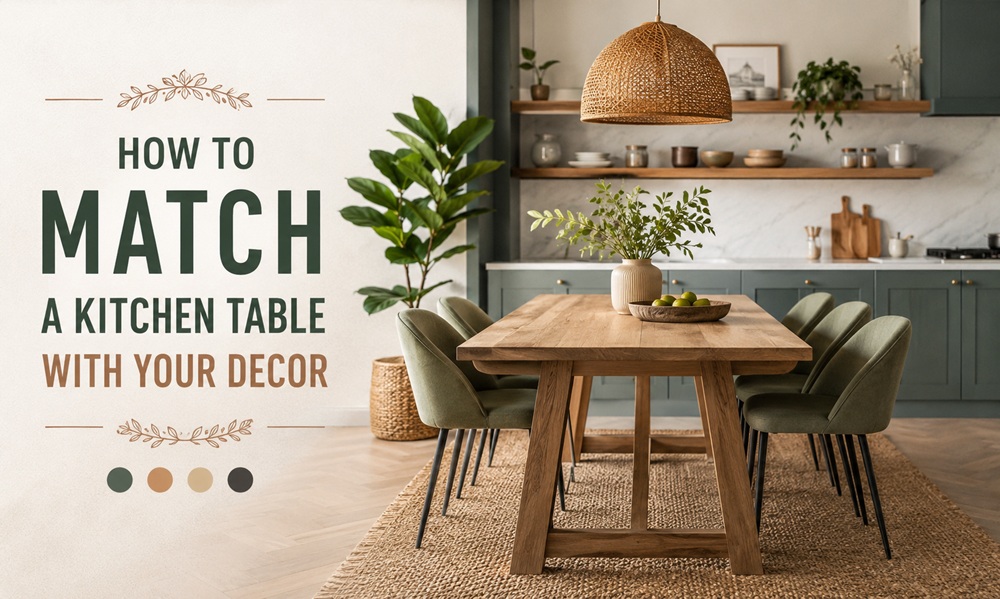

The fastest way to match a kitchen table with your decor is to pick a finish that echoes your cabinets or flooring, choose a shape that fits your room’s traffic flow, and tie the chairs into your existing color palette. A table doesn’t need to match every piece in the room exactly—it just needs to share at least one common element, like wood tone, metal finish, or color family, with the space around it.
If you’ve ever brought home a new table only to find it looks out of place, you’re not alone. Mismatched furniture is one of the most common kitchen styling mistakes, and it’s usually fixable without buying anything new.
Why Does My Kitchen Table Look Out of Place?
A table often clashes when its wood tone or finish fights with the cabinets, floor, or countertops instead of complementing them. Cool-toned gray wood next to warm honey-oak cabinets is a classic mismatch. The fix is to identify whether your kitchen’s existing tones lean warm or cool, then choose a table finish from the same family.
How To Match a Table to Your Cabinets
Start by looking at your cabinet undertones. Warm cabinets—oak, cherry, maple—pair well with tables in similar honey, walnut, or reddish-brown finishes. Cool cabinets, like gray or white shaker styles, look best with black, white, or weathered gray tables. If your cabinets are a neutral white, you have more flexibility and can lean into contrast with a darker wood table for visual interest.
Should You Match the Table to the Floor Instead?
Matching the table exactly to your floor can make a room feel flat. A better approach is to choose a table that’s either a shade lighter or darker than your flooring. This creates separation so the table reads as a distinct piece of furniture rather than disappearing into the floor.
Can You Mix Wood and Metal in a Kitchen Table?
Yes, and it’s one of the easiest ways to bridge two different style elements in a kitchen. A wood tabletop with black metal legs works in both modern and farmhouse kitchens because the metal can echo your faucet, light fixtures, or cabinet hardware, while the wood ties to your cabinets or floor.
Choosing the Right Shape and Size
Shape matters as much as finish. Long galley kitchens usually work better with rectangular tables, while square or round tables suit more open layouts and make smaller kitchens feel less cramped. As a rule of thumb, leave at least 36 inches of clearance around the table for chairs to slide out comfortably.
| Kitchen Style | Best Table Tone | Chair Pairing |
| Farmhouse | Warm wood, distressed finish | Mixed wood or woven seats |
| Modern | Black, white, or light oak | Sleek metal or molded plastic |
| Coastal | Whitewashed or light wood | Rattan or linen-upholstered |
| Industrial | Dark wood with metal accents | Metal frame, leather seats |
Local Insights for US Homes
In many US regions, open-concept kitchens have made the dining table a focal point visible from the living room, which means it now needs to coordinate with more than just the kitchen. Homeowners in warmer climates often lean toward lighter wood tones that reflect natural light, while northern regions tend to favor deeper, richer finishes that feel cozier during colder months.
Quick Checklist Before You Buy
- Identify whether your kitchen’s tones are warm or cool.
- Choose a table finish from the same family, or intentionally contrast with black or white.
- Confirm the shape fits your traffic flow and seating needs.
- Pick chairs that repeat at least one finish from the table or kitchen hardware.
Frequently Asked Questions
What wood tone matches oak cabinets?
Honey, golden, or medium walnut tones generally match oak cabinets best, since they share similar warm undertones without competing for attention.
Should the table match the floor or the cabinets?
Match the cabinets first, since they’re closer in eye level and define the room’s overall warmth. The floor should differ slightly to avoid a flat, one-note look.
Can you mix metal and wood in one table?
Yes. Mixed-material tables are versatile and help tie together kitchens that already combine wood cabinets with metal fixtures or appliances.
Does the table need to match the chairs exactly?
No. Many well-designed kitchens use chairs in a different but complementary finish, which adds visual interest instead of looking too matched.
Matching a kitchen table with your decor comes down to identifying your room’s dominant tone, then choosing a table and chairs that either echo or intentionally contrast with it. Once you nail the wood tone and shape, the rest of the styling tends to fall into place naturally.