
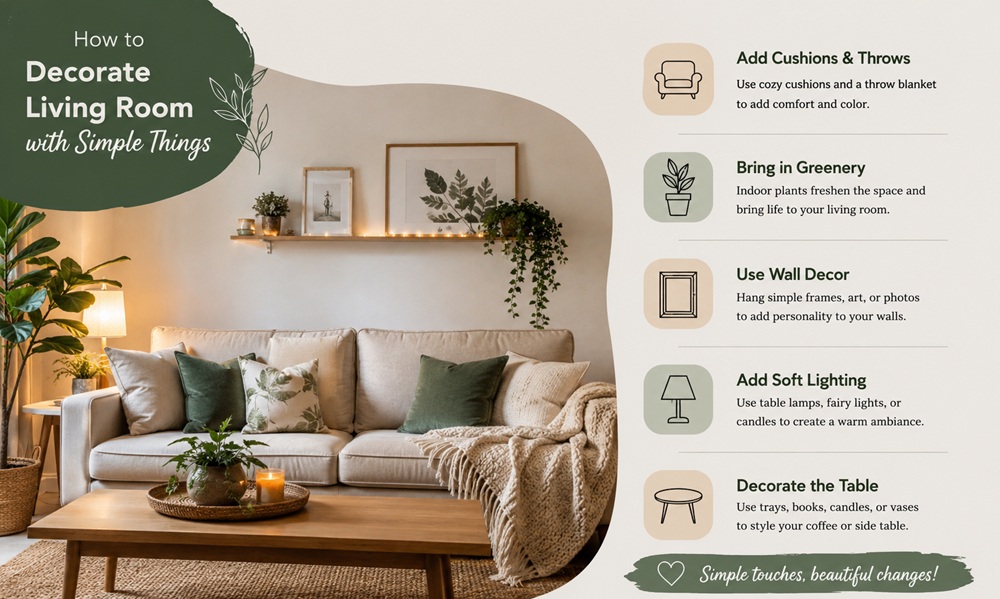

You can decorate a living room with simple things by rearranging furniture for better flow, swapping in fresh textiles like pillows and throws, adding a mirror or a few plants, and grouping what you already own into new combinations. None of this requires a shopping trip. Most living rooms already have enough pieces sitting in closets, other rooms, or storage bins to pull off a real refresh in an afternoon.
That’s good news if your budget is tight or you just moved somewhere and haven’t found your style yet. Small changes, done with intention, tend to have more visual impact than one expensive statement piece, and the process itself doesn’t need to take more than a weekend.
A Quick Checklist Before You Start
- Walk the room and list what you already own that isn’t being used
- Note where the natural light comes from
- Decide on one focal point (fireplace, TV wall, or window)
- Pull three items you’re willing to move from other rooms
- Set a 30-minute timer and just start moving furniture
Checking these off first keeps you from wandering around second-guessing yourself once you start. It also gives you a rough plan, so you’re not just shuffling the same three items back and forth without a clear direction.
Most people skip this step and go straight to buying something new, which is usually the more expensive route and often doesn’t solve the underlying layout problem. Taking fifteen minutes to plan first almost always saves both time and money later.
Start With Furniture Placement
Furniture arrangement is the fastest way to change how a room feels, and it costs nothing. Most living rooms default to pushing every piece against the wall, which actually makes a space feel smaller and less inviting, since it leaves an empty, unused pocket of floor in the middle of the room.
Try pulling the sofa a few inches off the wall and angling chairs toward each other instead of all facing the television. This creates a conversation area, which is how designers describe a layout built around talking rather than just watching a screen. Even a studio apartment benefits from this shift, since it makes the room feel like it has a purpose beyond just holding furniture.
If you have a rug, make sure the front legs of your major furniture pieces sit on it. A rug that only the coffee table touches makes the whole layout look disconnected, even if everything else in the room is nice. This one adjustment is often the difference between a room that looks staged and one that looks like it was carefully put together.
Don’t be afraid to test more than one arrangement. Moving a sofa a few feet in either direction, or swapping which wall the media console sits against, can completely change how open or cramped the room feels, and none of it costs anything beyond a little effort.
What Can You Do With Just Pillows and Throws?
Swapping pillow covers or adding one or two new throws is one of the cheapest ways to shift a room’s whole color story. Mix two solid colors with one patterned option, and vary the sizes slightly so the arrangement doesn’t look too matched or store-bought. A room with pillows that are all identical in size and color tends to look flat compared to one with a little intentional variety.
A throw blanket draped over the arm of a chair or folded across the back of a sofa adds texture without adding clutter. If you already own extra bedding, a duvet cover can often be repurposed as a large throw, and a table runner from the dining room can double as a smaller accent piece on an ottoman or shelf.
Rotating textiles seasonally is another trick that costs nothing if you already own a mix of fabrics. Lighter linen throws in spring and summer, then heavier knit textures in fall and winter, keep the room feeling current without buying anything new each time the seasons change.
How Do You Add Personality Without Buying Art?
Personal photos, kids’ artwork in simple frames, or a collection of items you already own (books, plants, even ceramics from the kitchen) can act as decor when arranged with some care. Group items in odd numbers, like three or five, and vary the heights so the eye has somewhere to travel instead of landing on one flat row.
A single large mirror leaned against a wall instead of hung can instantly make a room feel more finished and reflects extra light, which makes the space feel bigger for free. This is one of the highest-impact, lowest-cost changes available, especially in rooms with limited natural light.
Books are an underused decorating tool. Stacking a few horizontally with a small object on top, like a candle or a small plant, creates a simple vignette that looks intentional rather than random. Borrowing a few decorative items from a bedroom or home office and rotating them into the living room is a free way to keep the space feeling fresh.
Should You Rearrange Bookshelves and Shelving?
Yes, and it’s often the most overlooked fix. Pull everything off a shelf, then put items back in loose groupings by color or height rather than by category. Leave a little breathing room between groupings instead of packing every inch. A shelf with negative space looks curated; a shelf packed edge to edge looks cluttered no matter how nice the individual pieces are.
Try alternating between stacking books flat and standing them upright, and use the flat stacks as small pedestals for a plant or a framed photo. This kind of layering is what makes a shelf look like it was styled rather than just filled, and it’s something you can redo in under twenty minutes with items already in the house.
Bring in Something Alive
A houseplant, even an inexpensive one, adds color and softness that furniture alone can’t. If you don’t want to maintain a real plant, a well-made faux version placed in a nice pot does a similar job. Placing a plant in an empty corner is one of the fastest ways to make a room feel complete rather than sparse.
If you already have plants scattered around the house, consolidating a few into the living room, rather than spreading them thin across every room, tends to create more visual impact. A cluster of three plants at varying heights reads as intentional, while single plants scattered in different rooms can each look like an afterthought.
Pro Tips for a Pulled-Together Look
- Stick to a simple color story of two to three main colors so mismatched items still feel cohesive
- Layer lighting with a floor lamp or table lamp instead of relying only on an overhead light
- Leave some empty wall space; not every surface needs to be filled
- Step back and view the room from the doorway after each change, since that’s the angle guests see first
Small, deliberate moves like these usually make a bigger difference than people expect, and you can always adjust again next week if something isn’t quite working yet. Decorating with what you already own isn’t a compromise; it’s often what makes a room feel more personal than one filled with new purchases.