
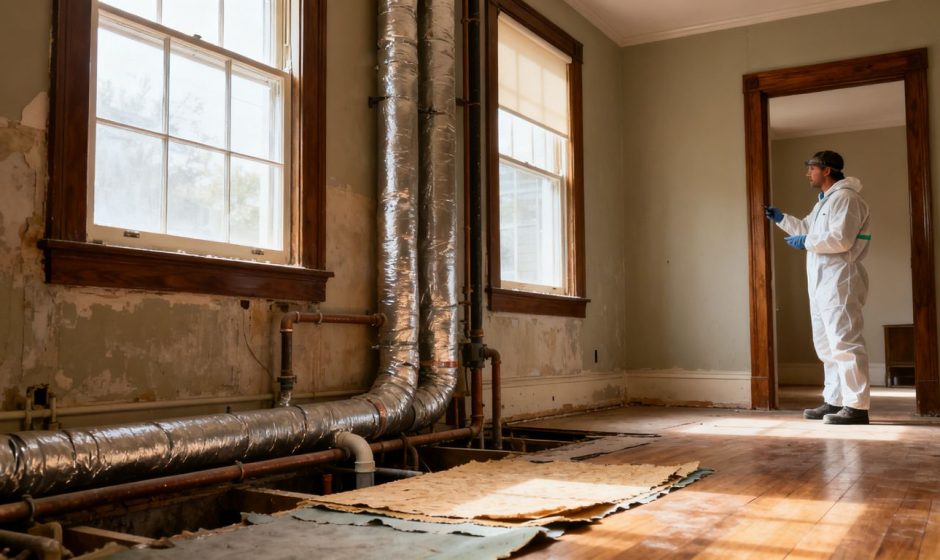

Asbestos appeared in many kinds of residential building products because it could be blended into other materials and used in varied ways. In older homes, it may be present in insulation, flooring, coatings, and cement products, sometimes hidden beneath later renovations. Its presence is not certain from a home’s age or appearance, but understanding why it was used helps explain where it may turn up. The question of asbestos risks at home is especially relevant before work that could disturb older materials.
Properties that made asbestos a popular building material
Asbestos fibers resist heat and fire, and manufacturers used them to add strength and durability to products. Depending on how it was combined, asbestos could be part of insulation, cement, flooring, or a coating. Those varied applications mean a suspected material may look nothing like the loose fibers people tend to associate with asbestos.
When asbestos-containing materials were commonly installed
Asbestos was used in residential construction for much of the twentieth century, with the timing and products varying by place and manufacturer. Many homes built before the 1980s warrant closer attention, particularly when original insulation, flooring, or wall and ceiling finishes remain. Later construction does not rule out asbestos, since some materials could remain in use or be installed from existing stock.
Why a home’s age can raise suspicion but cannot confirm asbestos
A construction date can help identify which materials deserve further attention, but it cannot establish what a particular product contains. Houses are often remodeled over time, and older materials may be covered by newer finishes rather than removed. Conversely, a newer-looking renovation can conceal an original layer underneath. Age is a clue, not proof; confirmation requires appropriate testing.
How asbestos exposure can affect health
Health risks arise when fibers become airborne and are inhaled. Exposure to asbestos is associated with serious diseases, including mesothelioma, lung cancer, and asbestosis; these conditions may take many years to develop. The actual risk depends on factors such as the amount and duration of exposure, so suspected materials should be handled cautiously rather than judged by appearance or a quick look.
Where asbestos may be found indoors
Asbestos-containing products were used across different parts of a home, from mechanical systems to decorative finishes. Some are easy to overlook because they are covered, painted, or tucked out of sight. A room-by-room awareness of common locations can help homeowners recognize when a planned repair may need a pause and a closer assessment.
Pipe, boiler, and duct insulation
Older heating and plumbing systems may have insulation around pipes, boilers, furnaces, or ducts. It can appear as a wrap, board, paper-like layer, or a coating around equipment and joints. Insulation in a basement or utility closet may be particularly easy to disturb during plumbing or heating work, so it should not be pulled away or scraped to identify it.
Vinyl floor tiles, sheet flooring, and adhesives
Some older vinyl floor tiles and sheet flooring, as well as the backing or adhesive used with them, may contain asbestos. New flooring does not necessarily mean the original layer was taken out; it may have been installed over it. Removing tiles, scraping adhesive, or sanding a floor can create dust, making material identification important before renovation begins.
Ceiling textures, plaster, and joint compound
Textured ceiling finishes, some ceiling tiles, plaster, and joint compounds used in older homes may contain asbestos. These materials are sometimes concealed by a later layer of paint or a suspended ceiling. Scraping a textured surface or cutting into a wall to run wiring can disturb them, even when the visible work seems small.
Roofing, siding, and other cement-based materials
Some older roofing and siding products were made with asbestos-containing cement or other compounds. Similar materials may be present in exterior panels or other building products. They can be difficult to distinguish from products without asbestos, and breaking, sawing, or drilling them may release dust. Their location outdoors does not make rough handling advisable.
Insulation around older appliances and heating equipment
Older appliances and heating equipment may have insulation or heat-resistant components that contain asbestos. Potential locations include areas near furnaces, boilers, and other equipment that produces heat. During replacement or servicing, workers may encounter materials behind a panel or near a connection, so suspected components should be assessed before they are removed.
Less obvious places asbestos may be hiding
Not every potential source is part of a visible wall, floor, or pipe. Small components and out-of-the-way spaces can also matter, particularly when a repair reaches behind a finished surface. Homeowners considering renovation planning can benefit from noting these less obvious locations before work is scheduled.
Attic insulation and loose-fill materials
Some older attic insulation, including certain loose-fill vermiculite products, may contain asbestos. Appearance alone cannot establish whether a particular insulation does. Avoid walking through, moving, or scooping loose material to inspect it; even an access hatch or storage project can disturb insulation that would otherwise remain untouched.
Fireplaces, wood stoves, and heat shields
Older fireplaces and wood stoves may have heat-resistant materials around the firebox, flue, or nearby wall. Gaskets, boards, and decorative components can also be present in older heating installations. These materials may be encountered during a stove replacement or fireplace repair, so cutting or pulling them out before assessment can create unnecessary disturbance.
Window putty, caulking, and glazing compounds
Some older window assemblies may contain asbestos in glazing compounds, putty, or caulking. These materials are easy to miss until a window is repaired or replaced. Scraping hardened compound or sanding a frame can generate dust, so the age and condition of the assembly should be considered before work begins.
Crawl spaces, basements, and utility areas
Crawl spaces and basements often contain pipes, ducts, old flooring, and leftover building materials. A narrow work area can make it tempting to shift or break materials to reach a repair, but that can disturb a suspected product. Utility areas also change over time, so a mixture of original and newer components may be present in the same space.
Garages, sheds, and other outbuildings
Older garages and sheds may have roofing, siding, panels, or insulation made with asbestos-containing materials. These structures are sometimes left out of renovation planning, even when they are included in a demolition or roofing project. Their age and construction can be uncertain, so suspected products should be assessed before cutting, breaking, or removing them.
When asbestos-containing materials become a concern
Finding a material that could contain asbestos does not automatically mean it is releasing fibers. Condition and planned activity both matter: a product left intact may pose less immediate concern than one being cut or scraped. This distinction is useful, but it is not a reason to ignore visible damage or to undertake repairs without knowing what the material is.
Why intact, undisturbed materials are generally less likely to release fibers
Asbestos fibers are more likely to become airborne when a material is damaged or disturbed. If a suspected product is in good condition and left alone, it is generally less likely to release fibers than a crumbling or actively disturbed one. That lower likelihood does not confirm the material is safe for every situation; planned maintenance or deterioration can change the assessment.
How cutting, sanding, drilling, or demolition can release fibers
Power tools and demolition can break asbestos-containing materials into small pieces or dust. Cutting, sanding, drilling, scraping, and pulling apart layered products can all create disturbance. Even a modest home project, such as fitting a pipe or replacing flooring, may reach material that was previously enclosed. The safest step is to identify suspect materials before work starts, not after dust appears.
Signs of damage that warrant caution
Crumbling, cracked, flaking, or water-damaged material deserves careful attention, especially if it is insulation or a surface that can shed debris. Damage may also be hidden behind a panel or ceiling, so a leak or recent construction can be a reason to reassess an area. These signs do not prove asbestos is present, but they are reasons to avoid touching the material and seek qualified advice.
Why appearance alone cannot identify asbestos
Asbestos-containing and asbestos-free products can look alike, and the fibers may not be visible to the naked eye. Color, texture, age, and a resemblance to a known product cannot reliably confirm its contents. A visual inspection can help document a concern, but laboratory analysis of an appropriate sample is needed to confirm asbestos.
How to confirm whether a material contains asbestos
When a suspected material could be disturbed, confirmation should come before the project proceeds. The process generally involves identifying the material, arranging appropriate sampling, and having a laboratory analyze it. Until the result is known, treating the material cautiously helps prevent an avoidable disturbance.
When to contact a qualified asbestos inspector
A qualified asbestos inspector can assess suspect materials when a renovation, repair, or demolition may affect them, or when damaged material raises concern. An inspection is particularly useful where several layers or building systems are involved and the source is unclear. The inspector can advise on the appropriate next step based on the material and the planned work.
What to expect from professional sampling and laboratory testing
A professional typically identifies the material to be assessed, collects a sample using procedures intended to limit disturbance, and sends it to a laboratory for analysis. The result can confirm whether asbestos is present in the sampled material; it does not automatically describe every similar-looking product elsewhere in the house. If multiple materials are involved, the inspector can explain what areas need separate assessment.
Why homeowners should avoid taking samples themselves
Collecting a sample can disturb the material and release fibers, particularly if it is brittle, damaged, or difficult to reach. A homeowner may also sample the wrong layer or fail to contain debris created during the process. Professional sampling avoids turning an unanswered question into a dusty cleanup, and helps ensure the result relates to the material that actually matters for the project.
How to document suspected materials before renovation
Clear notes can help an inspector and contractor understand the scope without disturbing anything. A homeowner can record a few practical details from a safe distance:
- The room or exterior area where the material is located.
- Its approximate size and the surface or system it appears to belong to.
- Visible damage, moisture, or loose debris, without touching it.
- The planned repair or renovation work that may reach the area.
Photographs taken without moving or scraping the material can supplement these notes. Together, the location, condition, and work plan help professionals decide what should be assessed before construction proceeds.
What to do before repairs or renovation
Planning ahead is the simplest way to avoid disturbing a material that has not been identified. Before work begins, homeowners can review the project area, ask whether existing layers or equipment will be affected, and arrange an assessment when needed. For a suspected material, a pause is usually more useful than an improvised attempt to remove or cover it.
Pause work that could disturb a suspected material
If a repair reaches a material that may contain asbestos, stop work in that area and avoid further contact. Do not sweep, vacuum, drill, or pull away pieces, since those actions may spread dust. Keep the area undisturbed while seeking guidance from a qualified professional, particularly if the material is damaged or debris is present.
Check local requirements and hire qualified professionals
Requirements for inspection, removal, and disposal vary by location and by the kind of project. Homeowners should check with the relevant local or state authorities before arranging work, and use qualified professionals when assessment or abatement is needed. A contractor should be told about suspected materials in advance so the work plan can account for them.
Understand the difference between repair, encapsulation, and removal
Repair may involve stabilizing or enclosing a material that can remain in place, while encapsulation applies a protective covering or sealant to limit fiber release. Removal takes the material out and may be appropriate when it is damaged or will be disturbed by the project. Which approach fits depends on the material, its condition, and the work planned; abatement options should be discussed with qualified professionals rather than chosen by appearance alone.
Plan for safe handling and disposal
Asbestos-containing materials require careful handling so fibers are not released or spread during work. Disposal rules and procedures vary, and ordinary household waste handling may not be appropriate. Before a project begins, the responsible professionals should explain how the material will be contained, transported, and disposed of under applicable requirements.
Keep household members away from damaged or disturbed areas
If a suspected material has been damaged or disturbed, household members should stay out of the affected area while a qualified professional advises on next steps. Keep children and pets away, and avoid carrying dusty items into other rooms. Limiting access does not replace professional assessment, but it can help prevent additional disturbance while the situation is addressed.