
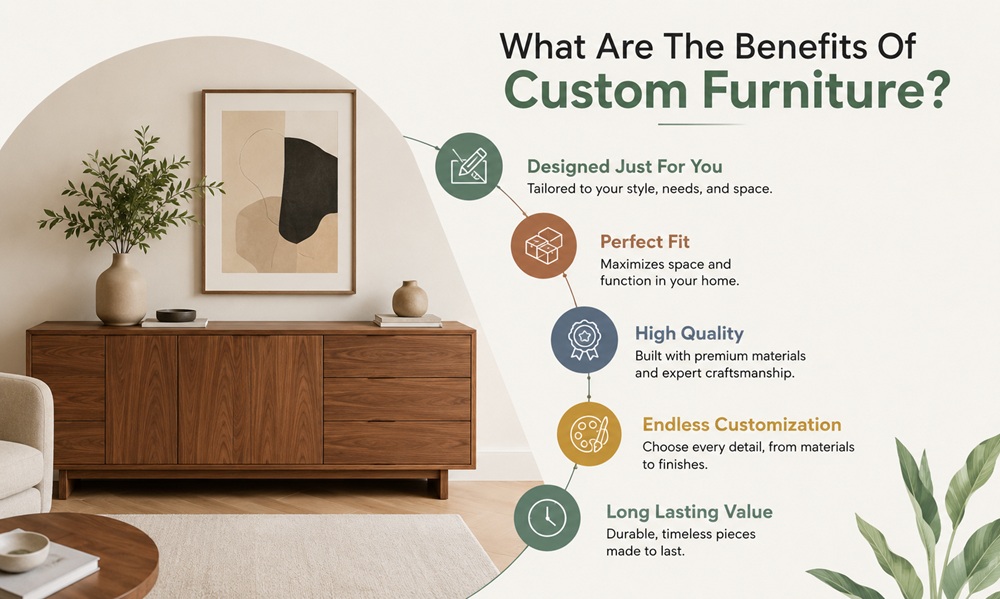

Custom furniture is built to your exact measurements, style preferences, and material choices, which means it fits your space perfectly, lasts longer than mass-produced pieces, and reflects your taste rather than a factory template. The upfront cost is usually higher, but the value shows up in fit, durability, and how long the piece stays in your home.
Plenty of people assume custom furniture is only for people with unlimited budgets. That’s not quite accurate, and it’s worth looking at what you actually get for the extra cost before writing it off.
Myth vs Reality: Is Custom Furniture Just for the Wealthy?
The myth is that custom furniture is a luxury reserved for high-end homes. The reality is that custom pieces solve practical problems that off-the-shelf furniture often can’t, especially in homes with unusual layouts, tight corners, or specific storage needs. A built-in bench for an awkward nook or a dining table sized for a narrow room isn’t about luxury, it’s about function that a standard 60-inch table simply won’t provide.
Fact: Custom Furniture Fits Your Actual Space
Store-bought furniture is built to average dimensions that work for the widest range of homes possible. Custom furniture is built to your room’s actual measurements. This matters most in smaller homes, oddly shaped rooms, or spaces with structural quirks like low ceilings or angled walls. A sofa that’s two inches too deep can make a small living room feel cramped, while a custom-fit piece uses the space efficiently.
Fact: You Choose the Materials and Construction
With custom furniture, you pick the wood species, joinery method, upholstery fabric, and finish. This level of control means you can prioritize durability over appearance if you have kids or pets, or choose sustainably sourced materials if that matters to you. Mass-produced furniture rarely offers this choice; you get whatever the manufacturer decided was cost-effective for that model.
Fact: Custom Pieces Tend to Last Longer
Furniture built by a skilled craftsperson using solid materials and traditional joinery typically outlasts furniture built for fast, cheap assembly. Dovetail joints, mortise-and-tenon construction, and solid hardwood frames are common in custom work and are more durable than the particleboard and staple construction found in many budget pieces. A well-made custom table can last decades and often gets passed down as a family piece.
Fact: It Reduces Landfill Waste Over Time
Because custom furniture is built to last and repaired rather than replaced, it tends to create less long-term waste than furniture designed for a five-year lifespan. If sustainability matters to you, working with a local furniture maker who sources responsibly can be a meaningful upgrade over fast furniture that ends up in a landfill within a few years.
Fact: Custom Furniture Reflects Your Actual Style
Rather than choosing from whatever styles a big retailer decided to stock this season, custom furniture lets you specify exactly what you want. This is especially useful if you have a specific design vision, need to match existing pieces, or want something that isn’t currently trendy in mass retail.
Fact: You Can Design for How You Actually Live
A custom media console can be built with the exact cable management, ventilation, and storage your electronics need. A custom kitchen island can be sized for how many people actually gather there. Off-the-shelf pieces are designed for a hypothetical average user, while custom furniture is designed around your actual habits.
Should You Buy Custom Furniture?
Custom furniture makes the most sense when you have an unusual space, want a piece to last a long time, or can’t find what you need in stores. It’s less practical if you need furniture quickly, since custom orders typically take weeks to months to complete, or if your budget is tight and standard furniture would meet your needs just fine.
How Much More Does Custom Cost?
Custom furniture typically costs 30% to 100% more than comparable mass-produced pieces, depending on the materials and complexity involved. A custom solid wood dining table might run $2,000 to $5,000, compared to $500 to $1,500 for a similar-sized store-bought table. The gap narrows when you factor in how long each piece actually lasts.
Practical Advice for Getting Started
If you’re considering custom furniture, start by getting quotes from two or three local makers so you can compare pricing and turnaround time. Bring exact measurements of your space, including door widths if the piece needs to be moved in after assembly. Ask to see examples of past work in person when possible, since photos don’t always show joinery quality or finish details clearly.
For smaller budgets, semi-custom options exist too. Some furniture companies let you choose fabric, finish, and dimensions from a set of options without a fully bespoke build, which can bring costs down while still giving you more control than buying off the shelf.
What to Ask a Custom Furniture Maker
Before committing to a project, ask about wood sourcing, warranty coverage, and the expected timeline from deposit to delivery. A reputable maker should be able to explain exactly where their materials come from and what kind of joinery they use, without vague answers. It’s also worth asking whether they offer repairs down the line, since one advantage of working with a local craftsperson is having someone who can fix a wobbly leg or a scratched finish years later, something that’s rarely an option with mass-produced furniture bought from a big retailer.
Payment structure matters too. Most custom furniture makers require a deposit upfront, often 30% to 50% of the total cost, with the balance due at delivery or completion. Clarifying this upfront, along with what happens if you need to cancel or modify the order mid-build, helps avoid misunderstandings later in the process.
Is Custom Furniture Worth It Long-Term?
For pieces you plan to keep for years, like a dining table or a bed frame, the higher upfront cost of custom furniture often evens out over time compared to replacing lower-quality furniture every few years. For pieces you expect to replace as trends or needs change, like a trendy accent chair, mass-produced furniture may make more financial sense. Thinking about how long you actually expect to keep a piece is one of the most useful ways to decide whether the custom route is worth the investment for that specific item.